


Sometimes, Inspiration Comes From Within.
It’s not often that your own gear inspires something completely different, but that’s just what happened with our new La Brea Analog Tape Drive.
An all-analog drive pedal that uses multi-stage tape saturation techniques to create driven tones ranging from mild breakup all the way to full fuzz, La Brea also features high frequency filtering and a fully variable dry output that always stays in phase with the original signal.
Your New Favorite Drive
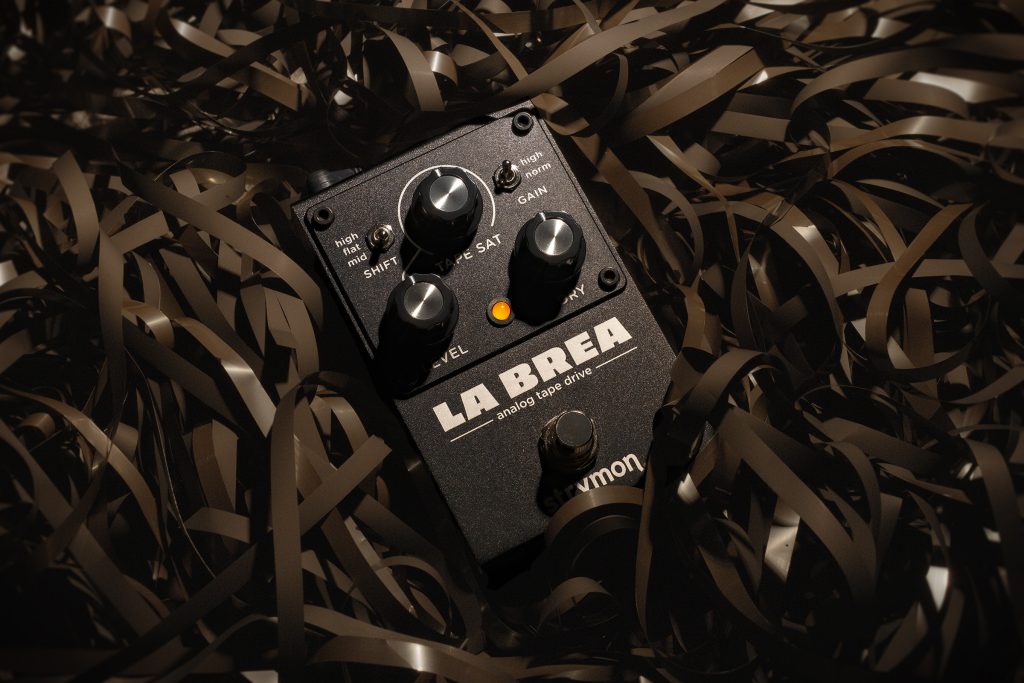
Twelve years ago, our analog engineer Josh read the original white paper that Pete Celi wrote on the development of our popular Deco pedal. The paper inspired him to begin experimenting with some of the tape-centric techniques used in Deco in a full analog drive pedal design, and over ten years of tinkering later La Brea is the result.
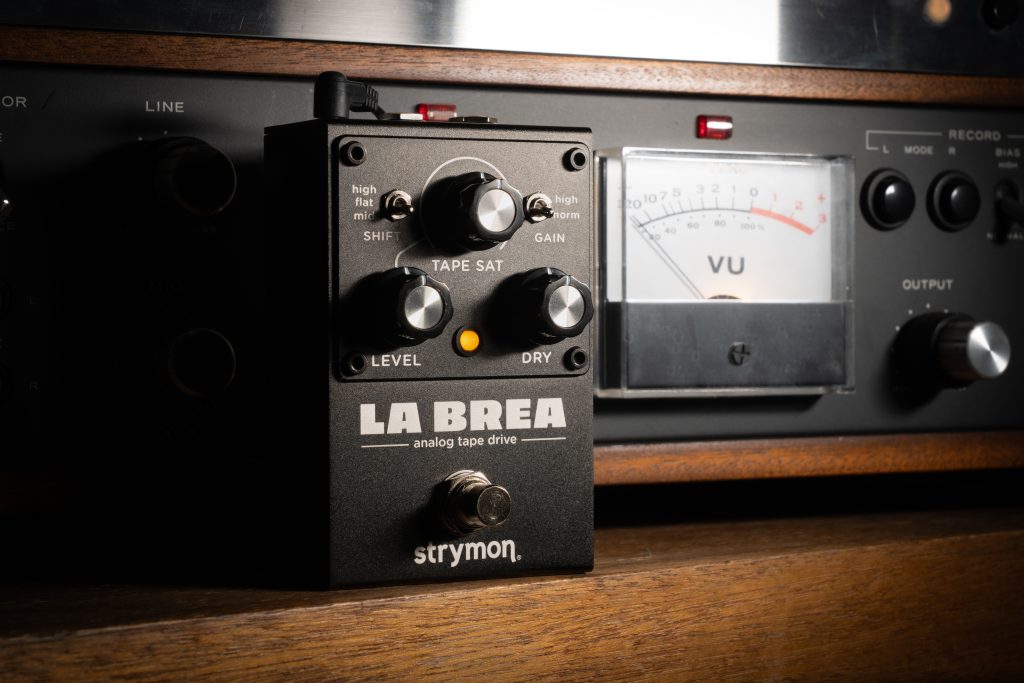
La Brea feels completely natural to play, as the tape techniques create some pleasing natural compression along with the saturation and gain. Whether you’re looking to punch up some crispy open-string arpeggios or throw up a full wall of unique fuzz, La Brea can achieve it.

The inclusion of the phase-accurate dry path yields benefits that may not be immediately obvious, as it can help create an even bigger soundstage than saturation alone. The dry path can keep things clear and articulate if desired, and it can really help other drive pedals that are further down in the chain too, as some pedals need a strong transient to get the right sound.

La Brea’s operating voltage is internally boosted to 24 volts using a custom internal power supply, providing ample clarity and headroom. As a result the pedal can operate as a vibey clean boost if you prefer, or an all-out fuzz depending on where your amp and the Tape Sat knob on La Brea are set to.
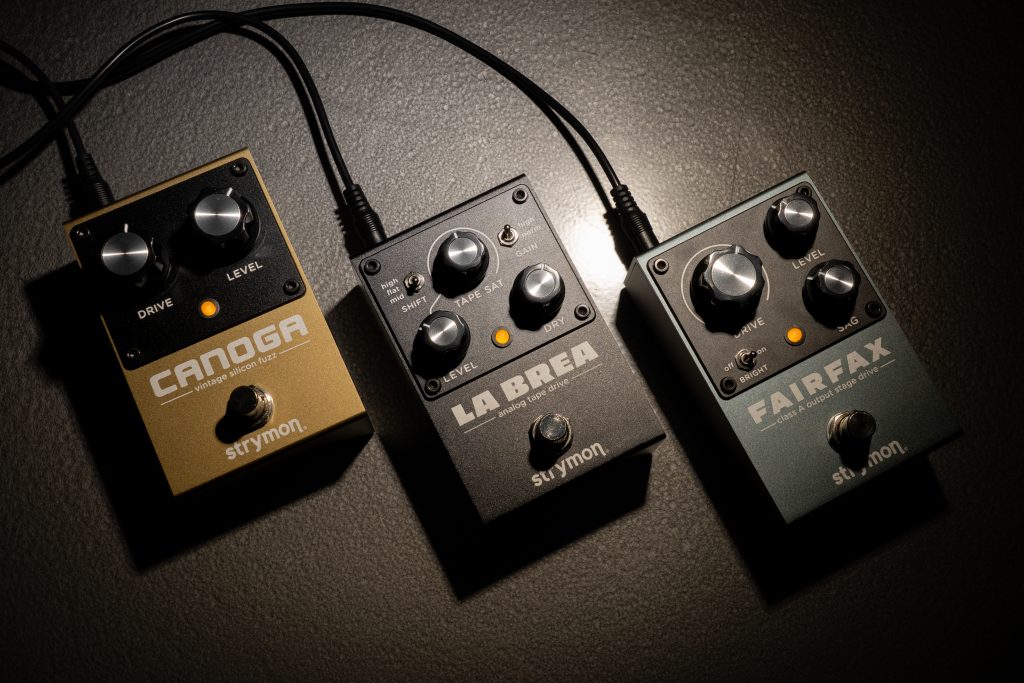
Like all the other members of Series A, La Brea also features an internal jumper that determines the power-up state (moving the jumper to the second position will cause the pedal to turn itself on automatically when it sees power). This can really help if La Brea is buried under the second deck of a complex pedalboard, or in a rack drawer in a rack system.

Killer code only sounds killer when it’s hosted inside of an ideal analog environment, and even though we’re primarily known for our DSP prowess, our stuff wouldn’t sound the way that it does without our strong analog team.
The analog guys are always coming up with interesting designs, so we’ve launched the ‘Series A’ line of pure analog pedals to give them an outlet, with Fairfax being the first in the line.
The designs you’ll be seeing in ‘Series A’ are intended to offer something different from traditional Strymon offerings, with no MIDI, USB, firmware or digital processing. These will be pedals that are unabashedly analog, which means it could get really interesting! Keep an eye out for more ‘Series A’ pedals as we go forward.
